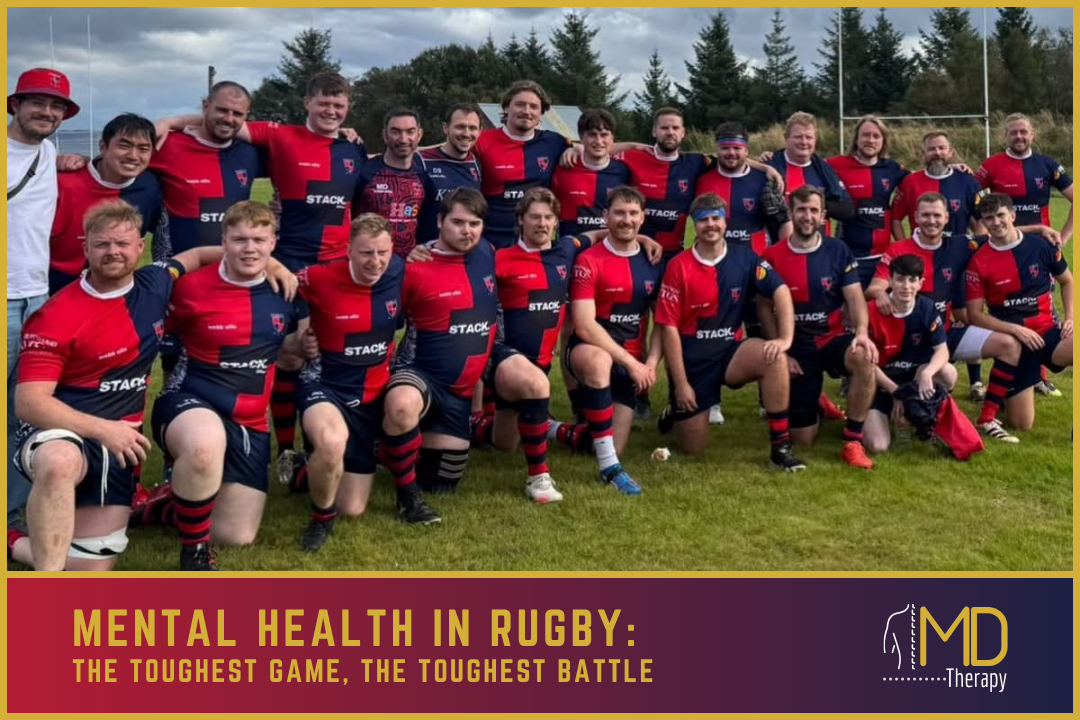
The Toughest Game, The Toughest Battle
Behind the tackles, teamwork and physical demands of rugby, there’s another side of the game we don’t always see.
Marc Dinardo, Sports Therapist and Head Physio at Paisley RFC, reflects on injury, identity, mental wellbeing and the power of belonging to a team.
The toughest battles aren’t always fought on the pitch
Rugby is a sport built on resilience, determination, teamwork and physical courage.

Every weekend, players put their bodies on the line for their teammates. They endure tackles, bruises, injuries and setbacks, often getting back up and carrying on without a second thought.
From the sidelines, it’s easy to see these players as physically strong, mentally tough and capable of handling whatever comes their way.
But what happens when the toughest challenges aren’t the ones we can see?
With mental health receiving increasing attention across sport, I believe it’s important that we look beyond physical performance and recognise the pressures facing athletes at every level.
Because being physically strong doesn’t mean someone isn’t struggling mentally.
Behind the physio room door
Through my experience working closely with rugby players, including my role as Head Physio at Paisley RFC, I’ve come to appreciate that supporting an athlete goes far beyond treating physical injuries.
The physio room is where we assess injuries, manage pain, discuss rehabilitation and work towards getting players safely back onto the pitch.
But it’s also somewhere players can step away from the intensity of training, competition and the expectations of the team.
One of the recurring themes I’ve become particularly conscious of is how much an injury can affect a player’s confidence, identity and sense of belonging.

When someone is injured, the questions aren’t always just about the pain they’re experiencing.
“How long will I be out?”
“Will I get back to playing the way I did before?”
“What if I can’t return at all?”
For someone whose weekly routine, friendships and personal identity are closely connected to rugby, those questions can carry enormous emotional weight.
And sometimes, behind the discussion about a sore shoulder or knee, there’s a much bigger conversation about confidence, uncertainty and the fear of losing something that matters deeply to them.
When injury takes away more than the game
One of the most difficult aspects of injury rehabilitation is the uncertainty.
As therapists, we can assess injuries, develop rehabilitation programmes, monitor progress and provide guidance on expected recovery.
But recovery isn’t always linear, and there isn’t always a definitive answer to when someone will be ready to return.
For a player, that uncertainty can be incredibly frustrating.
While their teammates continue training, preparing for matches and celebrating victories, an injured player may find themselves watching from the sidelines.
They can begin to feel disconnected from the very community that forms such an important part of their life.
Suddenly, they’re no longer contributing in the way they once did.
For some, this raises a difficult question:
“If I’m not playing rugby, where do I fit in?”
It’s something I believe deserves much greater attention.
We often measure rehabilitation through physical milestones: improved movement, reduced pain, restored strength and the ability to tolerate training.
But confidence, motivation, emotional wellbeing and a sense of belonging matter too.
An athlete might be physically progressing while still struggling with the psychological impact of being away from the game.
And equally, someone might be desperate to return before they’re physically ready, simply because they miss being part of the team.
That’s why I believe good rehabilitation must consider the whole person, not just the injured tissue.
The pressure to ‘man up’
Rugby has traditionally celebrated toughness, resilience and the ability to push through adversity.
These qualities are part of what makes the sport so compelling.
But there is an important distinction between encouraging resilience and creating an expectation that someone should simply endure everything without speaking up.
For generations, phrases such as “man up”, “take it like a man” or “just get on with it” have been normalised in sport and wider society.
Often said without harmful intentions, these expressions can nevertheless reinforce the idea that admitting vulnerability is somehow a weakness.
That expectation can make it difficult for someone to acknowledge when they’re struggling, whether physically or emotionally.
But pain isn’t weakness. Fear of re-injury isn’t weakness.
Feeling isolated, anxious or uncertain about your future in sport isn’t weakness.
And asking for help certainly isn’t weakness.
Real resilience isn’t about pretending everything is fine. It’s about having the confidence to recognise when something isn’t right and knowing you don’t have to face it alone.
Rugby’s greatest strength: the people around you
While rugby can create pressures, I also believe it offers something incredibly valuable when it comes to supporting mental wellbeing.
Community.
For many players, their rugby club is more than somewhere to train twice a week and play on a Saturday.
It’s a place where friendships develop, people look out for one another and individuals from very different backgrounds come together through a shared passion.
I’ve seen how important that sense of belonging can be.
The right teammates, coaches and friends can make a tremendous difference to someone’s experience of injury and recovery.
A simple message checking how an injured player is getting on, an invitation to remain involved with training, or making sure they still feel part of the squad can help maintain those important connections.
Players shouldn’t have to be available for selection to feel that they belong.
And sometimes, the best support doesn’t come from a formal conversation about mental health.
It comes from a teammate noticing someone has become quieter, asking how they’re doing or simply taking the time to listen.
Being part of a team should mean supporting one another through the difficult moments, not just celebrating the victories.
A game for everyone: celebrating inclusion in rugby
Another aspect of rugby that I believe deserves recognition is how diverse and inclusive the sport can be.
Through my involvement with teams including Glasgow Raptors RFC, I’ve had the opportunity to appreciate how rugby can bring people together from different backgrounds, identities and walks of life.
Inclusive clubs play an important role in challenging assumptions about who rugby is for and what a rugby player is supposed to look like.
At its best, rugby is a sport where the person standing beside you is valued as an equal, regardless of their background or identity.
What matters is mutual respect, teamwork and a shared commitment to one another.
This is something worth celebrating.
The game has not always been free from stereotypes or barriers to participation, and there’s undoubtedly more progress to be made.
But seeing clubs actively create welcoming environments demonstrates how rugby culture can continue to evolve.
And this matters for mental wellbeing too.
When people feel accepted for who they are, rather than feeling pressure to fit a particular stereotype, it becomes easier to build genuine connections and ask for support when it’s needed.
Rugby doesn’t have to be defined by outdated expectations of masculinity or toughness.
It can be defined by respect, belonging and looking after the people around us.
Sometimes listening matters as much as treating
Throughout my career in fitness, rehabilitation and sports therapy, one of the most important lessons I’ve learned is that helping someone doesn’t always mean immediately finding a solution.
Sometimes, it starts with listening.
In the physio room, my responsibility is to assess injuries, provide appropriate treatment and guide players through rehabilitation.
But understanding how an injury is affecting someone’s life, confidence and wellbeing is also an important part of supporting their recovery.
It means taking the time to ask questions, acknowledging uncertainty and recognising when someone may need additional support.
It doesn’t mean that sports therapists, coaches or teammates need to become mental health professionals.
It means creating an environment where people feel comfortable talking, recognising our professional boundaries and helping them access appropriate support when needed.
Not every player who is frustrated about an injury is experiencing a mental health condition.
But equally, we shouldn’t dismiss someone’s emotional difficulties simply because they appear physically strong or continue to perform well.
We need to remember the person behind the player.
Stronger together, on and off the pitch
I love rugby for the camaraderie, determination, teamwork and sense of community that make it such a special sport.
And through working closely with players, I’ve developed an even greater appreciation of the responsibilities we share in supporting one another.
Whether it’s helping an injured player rebuild confidence, keeping someone connected to their teammates during a lengthy recovery, or simply recognising when a friend might need someone to talk to, the smallest gestures can have real meaning.
We can celebrate the toughness and competitiveness of rugby while also recognising that vulnerability is part of being human.
We can encourage resilience without telling people to suffer in silence.
And we can build teams where everyone feels respected, accepted and supported, whether they’re scoring tries, recovering on the sidelines or facing challenges away from the pitch.
At MD Therapy, I’ve always believed in looking beyond the immediate injury and understanding the individual behind it.
Because recovery isn’t just about getting someone back onto the pitch.
It’s about helping them regain confidence, rebuild their capabilities and feel ready to return to something they love.
Rugby teaches us to be strong for our teammates. Perhaps one of the greatest strengths we can show is being there for them when they’re struggling.
And sometimes, the most important question we can ask isn’t “When will you be back playing?”
It’s simply:
“How are you doing?”
Marc Dinardo
Sports Therapist | MD Therapy UK
Head Physio | Paisley RFC
Mental health support
If you or someone you know is struggling with their mental health, remember that support is available.
- Samaritans: Call 116 123, free, 24 hours a day.
- Breathing Space (Scotland): Call 0800 83 85 87.
- Brothers in Arms, local support charity.
- Scottish Rugby Mental Wellbeing resources.
- NHS 24: Call 111 for urgent mental health support in Scotland.
- Immediate danger: Call 999.
You can also speak with your GP or a qualified mental health professional.
Talking about mental health shouldn’t be seen as a weakness. It can be the first step towards getting the support you need.